
Jackson Previous Residents: Dated Sources
A backward address trail changes by era. Land records preserve title parties and legal descriptions. Directories are the address-to-household layer for the years they exist. Census schedules are snapshots, and newspapers, permits, maps, and probate can explain a gap. Keep the source date beside every Jackson name. That prevents an old entry from being read as a current address record.
| Source | Years it covers | Where held | What it can show |
|---|---|---|---|
| Deed index | Land records reported from 1821; TSLA microfilm 1821-1899 | Register of Deeds and TSLA | Title parties, recording references, legal descriptions |
| Jackson directories | 1904-1913; scattered 1937-1960; listed 1998-2015 runs | Tennessee Room, TSLA, and catalogs | Address and household clues for a directory year |
| Federal census | 1810-1950 in library listings | NARA and Tennessee Room | Household snapshot at the census date |
| Tax books | From 1897 in the county guide | TSLA and county sources | Property and tax-owner history |
| Jackson newspapers | Scattered 1823 issues; complete 1936-2011 run | Tennessee Room and ProQuest | Obituaries, notices, moves, and family context |
| Permits and maps | Current ViewPoint; historical cutoff not verified | Building & Codes, Library of Congress, and library | Structure and address context, not title |
Start with assessment and recorded transfers for a recent Jackson address. Move to the Tennessee Room, TSLA microfilm, and census sources when the target year predates an available online result. The right source depends on whether the question is about title, a household, the building, or a family after a death.
Jackson Previous Residents: Start With Parcel
Use Tennessee Property Assessment Data to identify the current owner, situs address, parcel ID, subdivision, lot, and sale date where displayed. The situs is the location of the property. A tax mailing address is only a correspondence address. Neither one proves that every person who lived at the Jackson address is named in the assessment record.
The Madison County Assessor can add the local file layer. Its staff have scanned parcel folders, property record cards, physical 400-foot and 100-foot maps, and an in-office Map Viewer. Most folders are scanned. Those sources may help connect a modern parcel to a map or old description when a street number is not enough.
Jackson Previous Residents: Deed Trail
The Madison County Register of Deeds says its land records date to 1821 and its office is computerized. The county page does not expose an official public-index URL or a published online cutoff. Visit or call the office at 100 E. Main Street, Suite 109, 731-423-6028, Monday through Friday from 9:00 a.m. to 5:00 p.m. for the available grantor, grantee, copy, and image route.
- Record the current owner and legal description from the assessment result.
- Search that owner as grantee for the purchase instrument, then preserve its recording date, book and page or instrument number, parties, legal description, and copy status.
- Use the seller from that instrument as grantee to find the earlier purchase.
- Repeat backward, comparing names, lot or block, subdivision, and plats when the street address is absent or has changed.
- For 1821 through 1899, use the TSLA direct and reverse deed-index microfilm if the courthouse route does not answer the earlier step.
- Grantor
- The person or entity transferring an interest in a recorded instrument.
- Grantee
- The person or entity receiving that interest.
- Chain of title
- The sequence of recorded transfers for a parcel, read one transaction at a time.
- Legal description
- The lot, block, subdivision, metes, or other land description that identifies property more reliably than an old street number.
A seller's next deed may show a later property transaction, but it does not establish a move date. Keep the chain as title evidence and seek a directory or census for household evidence.
Jackson Previous Residents: Alert Tip
The Register of Deeds also links a Madison County property-fraud alert enrollment page. A property owner can review that official entry point when concerned about new recorded-document activity associated with property. The research did not verify a fee, coverage rule, or the alert's launch date, so those terms should be confirmed on the service before enrollment.
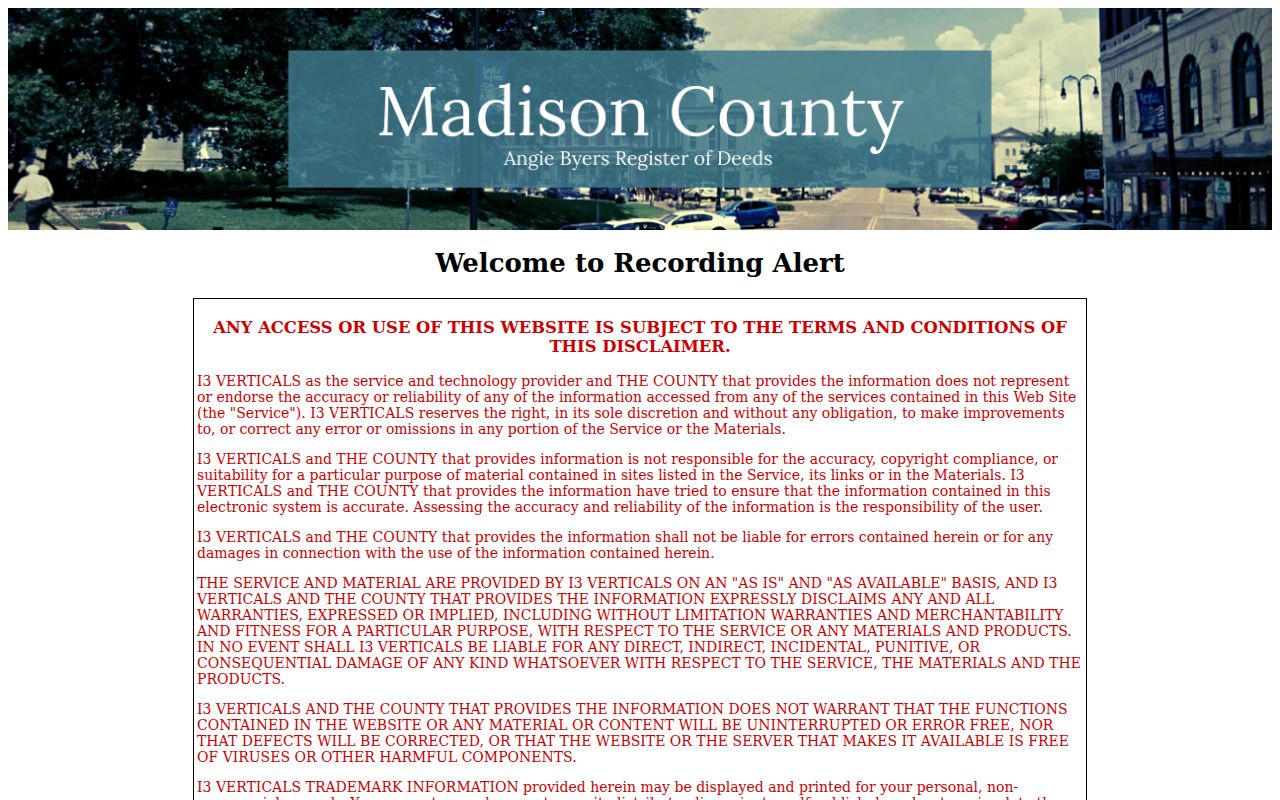
An alert is not a house-history record and does not identify occupants. It is a separate way to notice recorded land-document activity that may warrant a direct check with the Jackson Register office.
Jackson Address Continuity
The main trap in past-residents research is treating the current street address as permanent. Jackson's older interconnected grid and later postwar subdivisions call for different keys. An older deed may be best matched through a lot, block, plat, old street name, courthouse map, or nearby landmark. A newer subdivision may be easier to bridge through a parcel ID, plat, and map imagery.
No verified citywide renumbering or renaming year was found. Do not assign one. If two records look similar, compare the legal description, adjacent parcels, directory street section, and dated map before merging them into one Jackson address history.
The Library of Congress Sanborn map collection can supply building and street-layout context. Exact Jackson sheet years were not verified. A Sanborn map can help date footprints, materials, or industrial change, but it does not name the people who lived in a structure.
Save the conflicting forms of the address rather than discarding one. A deed's lot-and-block language, a directory's street spelling, and a map's nearby landmark can all be the evidence needed to bridge a Jackson address across decades. If the connection remains uncertain, label it as unresolved and continue with the next dated source.
Jackson Previous Residents: Household Trail
The Tennessee Room at the Jackson-Madison County Library is the practical bridge from title to past households. It accepts Property Information and Madison County History inquiries and holds maps, directories, newspapers, obituaries, vertical files, funeral records, and original materials. The room is non-circulating, open Monday through Saturday from 9:00 a.m. to 5:00 p.m., with staff assistance for originals.
For a family at a Jackson address, pair the 1937 directory with the 1940 census, then pair a 1950 directory entry with the 1950 census. The directory fills annual gaps, and the census provides a dated household snapshot. Compare street and number, names, age or relationship details where available, and occupation only as a historical identification clue. The volumes and shelf runs are covered in the Jackson city directories.
Search a reverse or criss-cross street section first, then the alphabetical section. A directory might include a spouse notation, occupation, telephone, business listing, or widow notation, but the exact contents vary by volume. The local sample page and abbreviation key were not machine-inspected, so read the volume's own key before interpreting an abbreviation.
Jackson Previous Residents: Trail Endpoints
Jackson newspapers and the obituary index can close a household trail. The Tennessee Room's obituary index begins in 1936, and the research identifies a more complete Jackson Sun run from 1936 through 2011, with scattered newspaper issues beginning in 1823. An obituary may provide a death date, family names, funeral home, or later residence. It should be retained with its publication date and checked against the original notice when possible.
Probate and will records can identify successors after an owner dies. Madison County wills begin in 1825 in the TSLA guide. A successor or heir is a relationship lead, not proof that the person then lived at the Jackson address. When a court copy is needed, use the Madison County court copy and certification request with the case number, division, and exact item sought.

The form lists $0.50 per page and $5 per certification. It also says complete or multiple files require the requester to use the records-room computer and copier in person.
Jackson Previous Residents: Vital Limits
A death certificate, verified information, and a newspaper obituary are different records. Tennessee guidance places birth records on a 100-year genealogy or public-access timeline and death, marriage, and divorce records on a 50-year timeline. Certified copies have identification and entitlement rules. The Tennessee Vital Records fee page lists $15 for a first or additional certificate and $15 for verified information or a no-record letter.
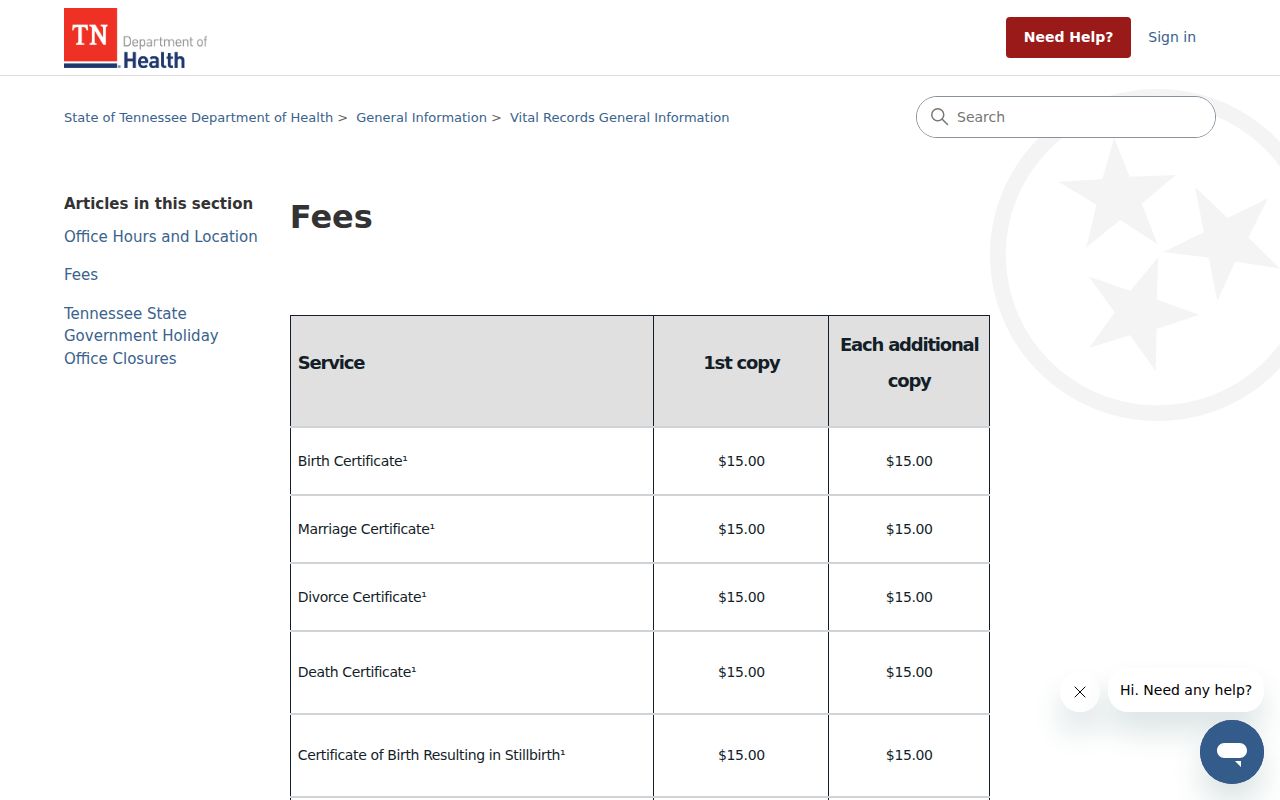
Use a certificate request to verify an event through the state, not to substitute a later family fact for a dated Jackson household record.
Tennessee Vital Records entitlement guidance explains the eligible relative and representative categories.
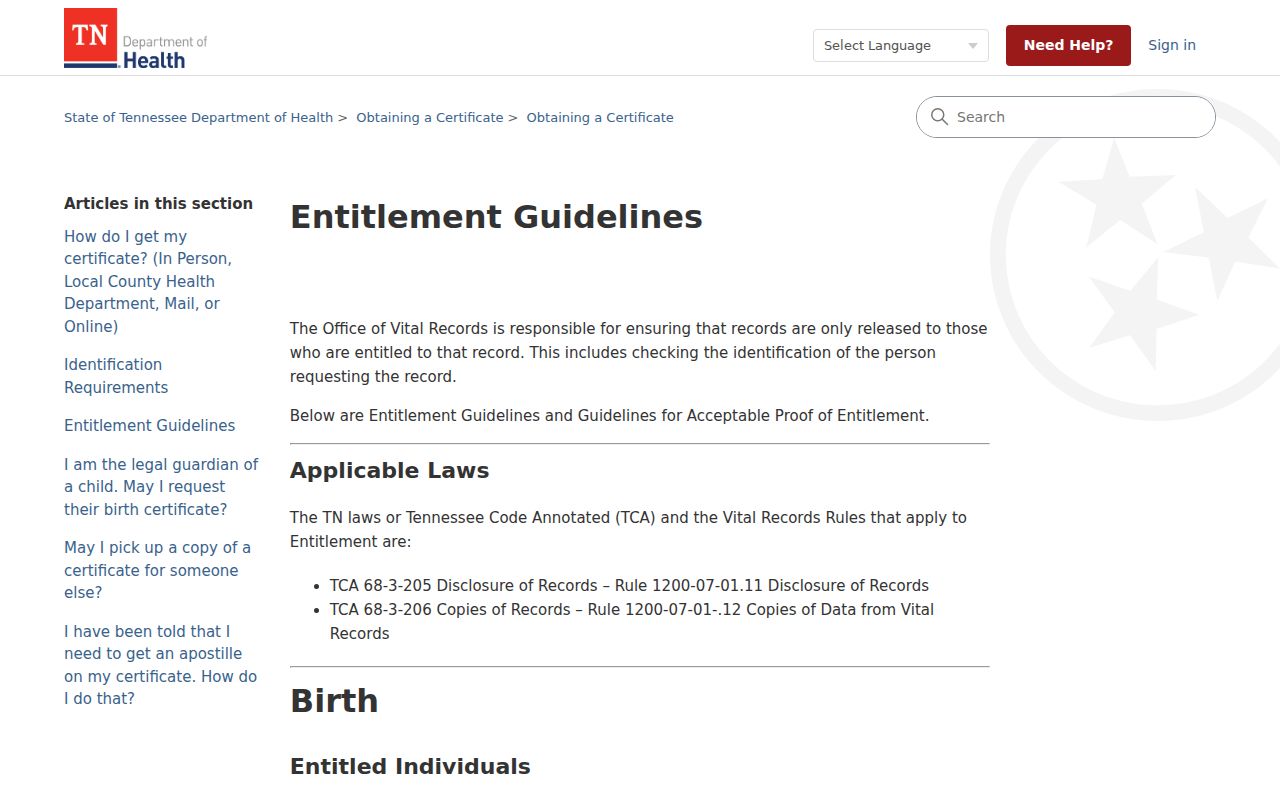
Those access rules help explain why a public obituary index and an official certificate request do not return the same information.
Jackson Previous Residents: Respect the Record
Past-residents work is strongest when it stays within a house-history, family-history, estate, or civic-research question. A property owner, tax name, deed party, obituary relative, and directory resident can be different people. Record the source, year, page or instrument reference, and unresolved conflict instead of forcing a match.
Jackson records also have protected boundaries. Sealed court files, protected addresses, and restricted vital records remain restricted. If an old source conflicts with a current record, contact the custodian that holds the underlying document. Accuracy comes from a documented trail, not from combining private facts.
Lawful use. Use Jackson previous-resident records for family, property, estate, or local-history research. Never use them to track, threaten, stalk, harass, or harm a living person.